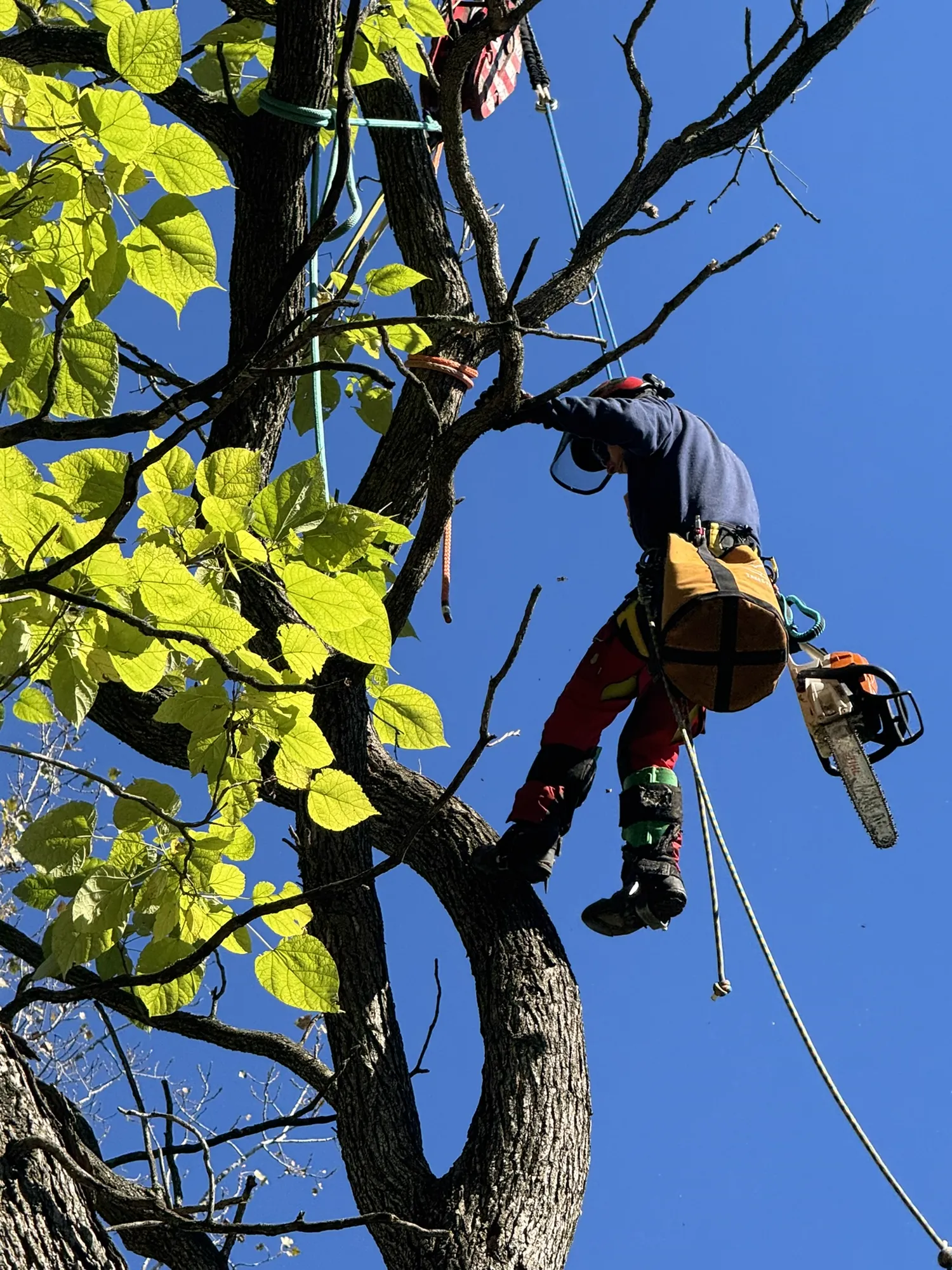
Trimming & Pruning in Ann Arbor, MI — Structural pruning that protects your trees — and your roofline.
Professional tree trimming and pruning in Ann Arbor, MI. Crown thinning, deadwood removal, and structural pruning. Fully insured. Free estimates.
Tree trimming and pruning is the selective removal of branches to improve a tree’s health, structure, and appearance. In Southeast Michigan, regular pruning is essential for managing the mature hardwood canopy that defines neighborhoods across Ann Arbor, Ypsilanti, Plymouth, and surrounding cities.
Foundations Tree Experts provides professional pruning services guided by ISA standards, with our crew available to assess every tree and recommend the right approach.
What types of pruning do you offer?
We offer several types of pruning depending on the tree’s condition and your goals:
- Crown thinning — selectively removing interior branches to improve light penetration and air circulation, reducing wind resistance and disease risk
- Crown raising — removing lower branches to clear rooflines, driveways, sidewalks, and sight lines
- Crown reduction — reducing the overall height or spread of the canopy through proper cuts (never topping)
- Deadwood removal — removing dead, dying, or diseased branches to prevent breakage and improve appearance
- Structural pruning — correcting poor branch architecture in younger trees to prevent problems as they mature
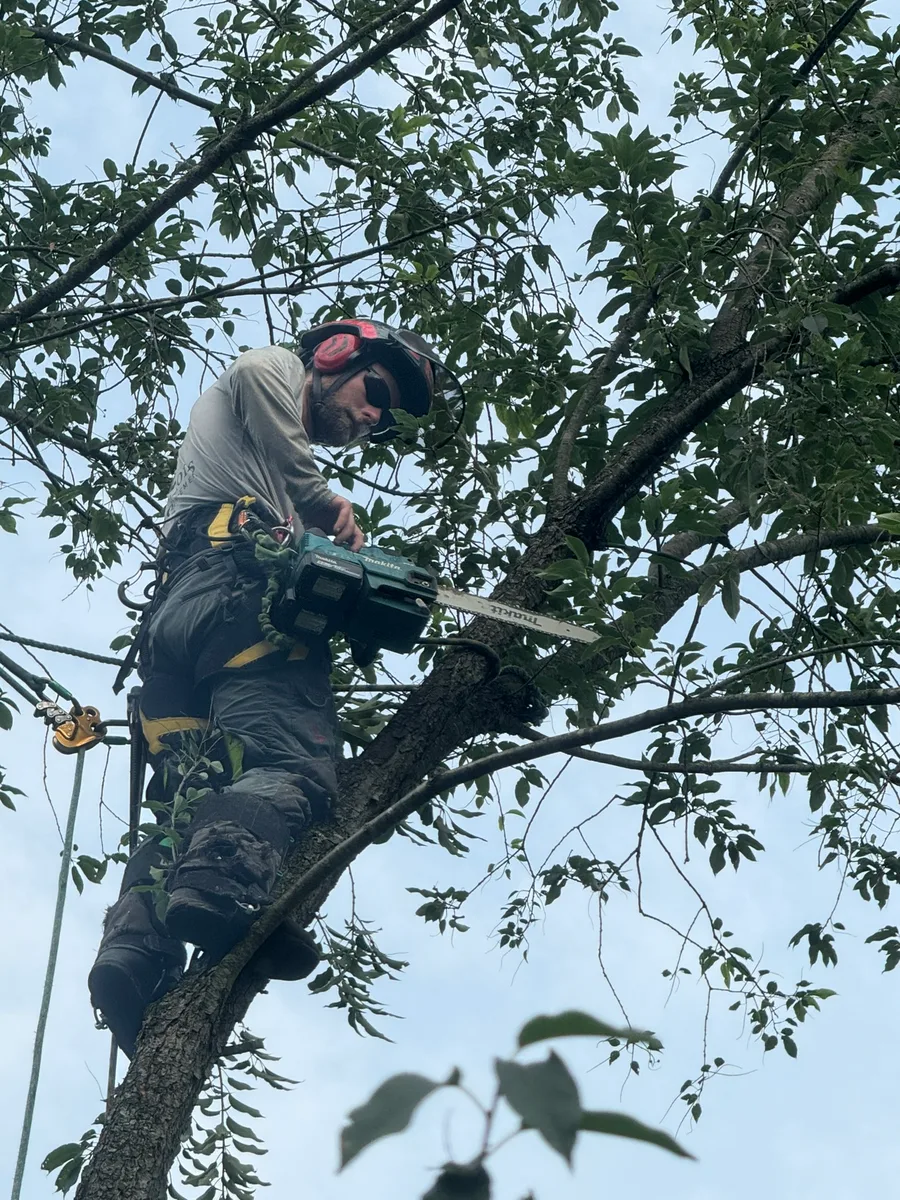
Why does seasonal timing matter in Michigan?
Michigan’s climate creates specific windows for safe pruning. The timing matters because fresh cuts can attract insects and pathogens that spread disease:
- Late winter to early spring (February–April): Best for most deciduous trees. The tree is dormant, sap flow is minimal, and the branch structure is fully visible without leaves.
- April through July: Never prune oaks during this period. Oak wilt — a deadly fungal disease spread by sap beetles — is actively transmitted through fresh wounds on oak trees during warm months.
- Year-round: Deadwood removal is safe at any time since dead branches no longer carry disease into the living tree.
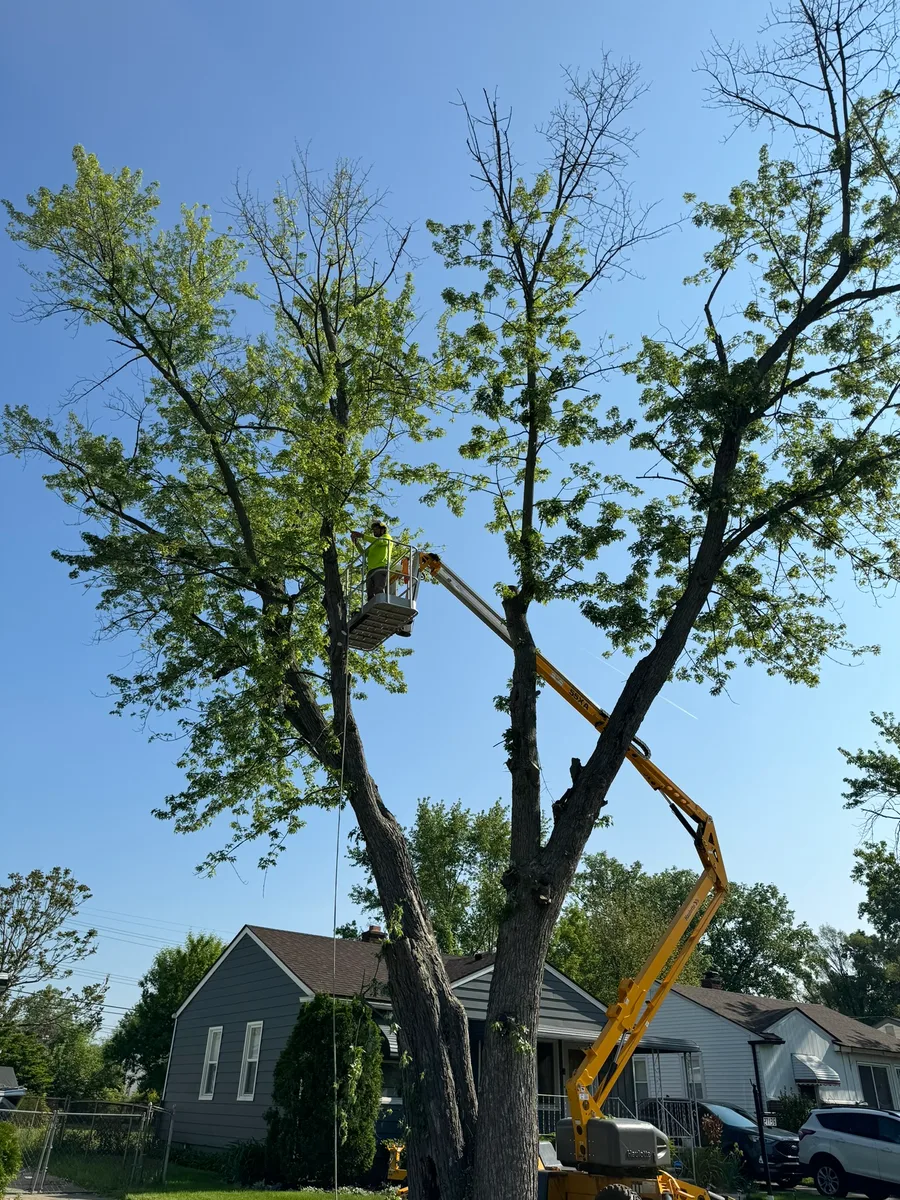
How do you decide what to prune?
Every pruning job starts with an assessment. Our crew evaluates:
- The tree’s species, age, and overall health
- Branch structure and any defects (co-dominant stems, included bark, crossing branches)
- Proximity to structures, power lines, and other trees
- The homeowner’s goals (clearance, aesthetics, health, storm prep)
ISA standards recommend never removing more than 25% of a tree’s live canopy in a single session — over-pruning stresses the tree and triggers excessive sucker growth. Every cut follows ISA standards, made at the proper branch collar to promote compartmentalization and healthy wound closure.
Ready for a free trimming & pruning estimate?
We'll walk the property, assess the job, and give you a firm written quote — no pressure, no obligation.
How trimming & pruning works
Free tree assessment
Our crew walks the property, evaluates each tree's health, structure, and growth pattern, and recommends the right type of pruning.
Schedule a weather-appropriate window
We book a date that works for you and matches the right seasonal timing for the species involved.
Professional pruning
Our crew follows ISA pruning standards — every cut is made at the proper branch collar to promote healthy healing and prevent disease entry.
Cleanup and walk-through
All cuttings are chipped and hauled away. We walk the property with you to make sure you're happy with the results.
Trimming & Pruning FAQ
When is the best time to prune trees in Michigan?
For most deciduous trees in Michigan, late winter to early spring (February through April) is ideal — the tree is dormant, disease risk is lower, and the branch structure is fully visible. Deadwood can be removed any time of year. Oaks should never be pruned from April through July due to oak wilt risk.
What's the difference between trimming and pruning?
Trimming generally refers to shaping and maintaining the overall look of a tree. Pruning is more targeted — removing specific branches for health, structure, or safety reasons. We use the term interchangeably with homeowners, but our approach is always based on ISA pruning standards that prioritize tree health.
Will pruning hurt my tree?
Proper pruning done at the right time of year actually improves tree health by removing dead, diseased, or crossing branches and improving air circulation through the canopy. Improper pruning — like topping — can severely damage a tree. We never top trees.
How often should trees be pruned?
Most mature trees benefit from pruning every 3 to 5 years. Younger trees may need structural pruning more frequently to establish good form. Our crew can recommend a maintenance schedule during your free assessment.
Do you prune trees near power lines?
Yes — we regularly prune branches growing toward power lines, rooflines, and other structures. Our crew takes every precaution to work safely around utilities.