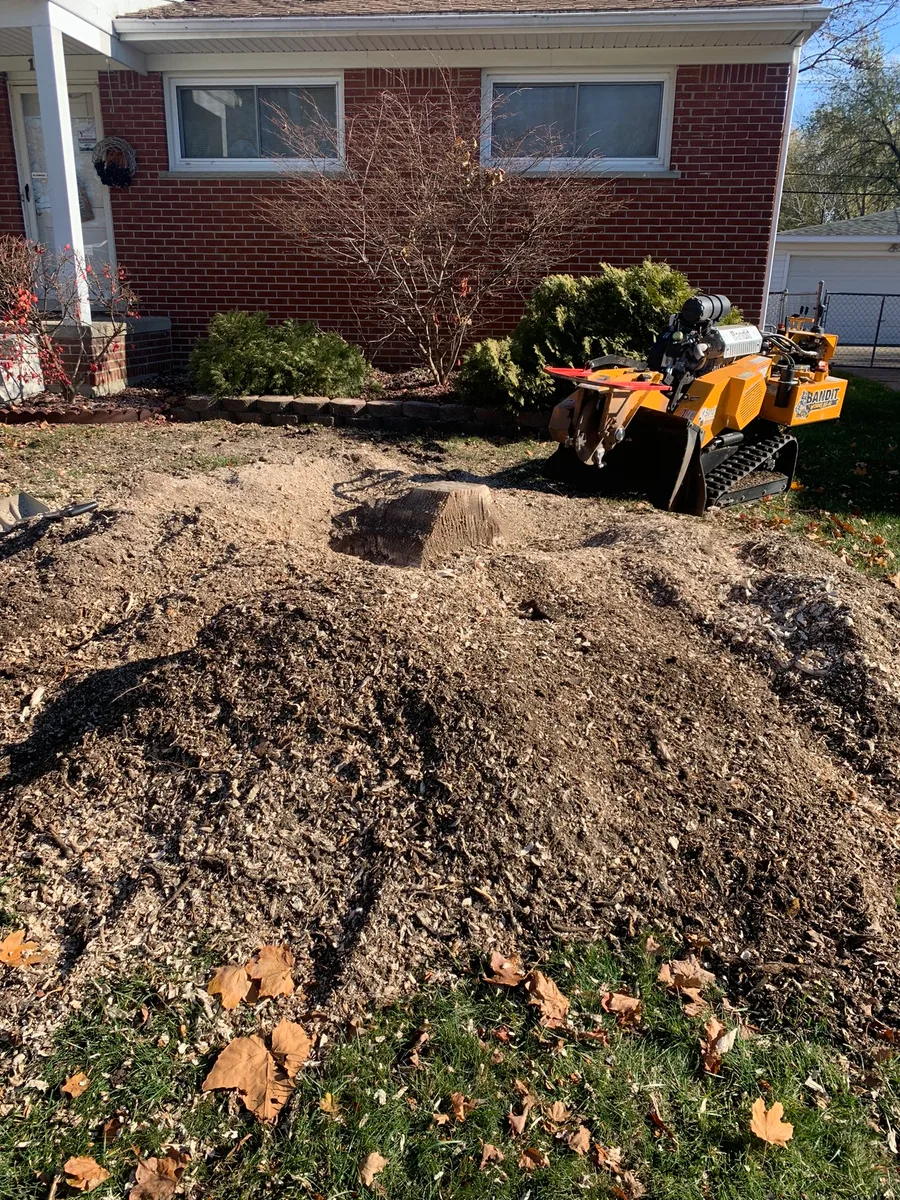
Stump Grinding in Ann Arbor, MI — Grind it down. Clean it up. Move on.
Professional stump grinding in Ann Arbor and Southeast Michigan. Below-grade grinding, full cleanup, and backfill included. Free estimates from Foundations Tree Experts.
Stump grinding is the mechanical removal of a tree stump to below the soil surface, creating a clean area ready for reseeding, replanting, or landscaping. After a tree is removed, the stump and root flare remain at ground level — an eyesore that also attracts insects and interferes with mowing.
Foundations Tree Experts grinds stumps across Ann Arbor and Southeast Michigan using commercial-grade equipment that handles stumps of all sizes.
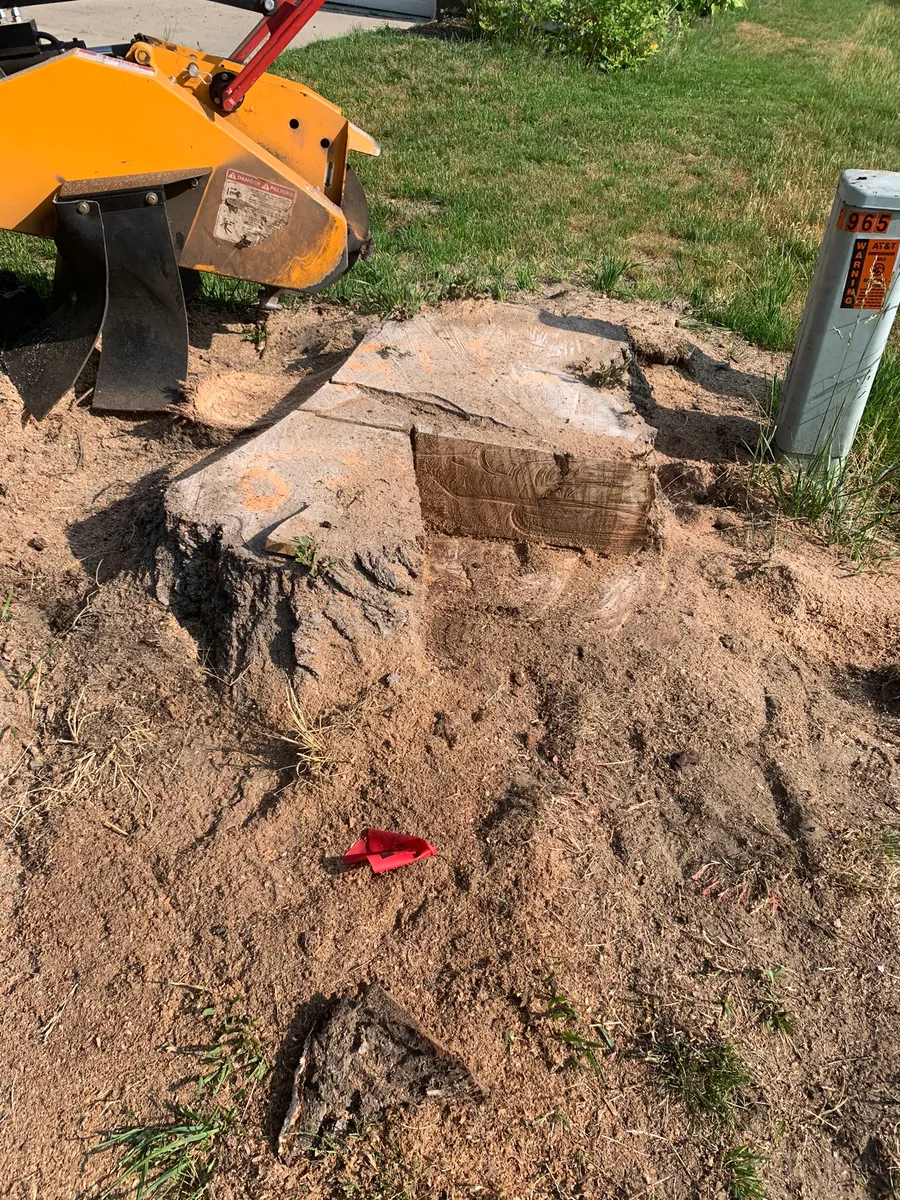
Why grind a stump instead of leaving it?
A leftover tree stump creates several problems over time:
- Attracts termites, carpenter ants, and wood-boring beetles that can eventually migrate to nearby structures
- Creates a tripping hazard in the yard, especially as grass grows around it
- Interferes with mowing and forces the mower operator to navigate around it every pass
- Can resprout — some species (like silver maple and elm) send up suckers from the remaining root system
- Takes up usable yard space that could be used for a garden, patio, or new tree
- Decreases curb appeal and can affect property value
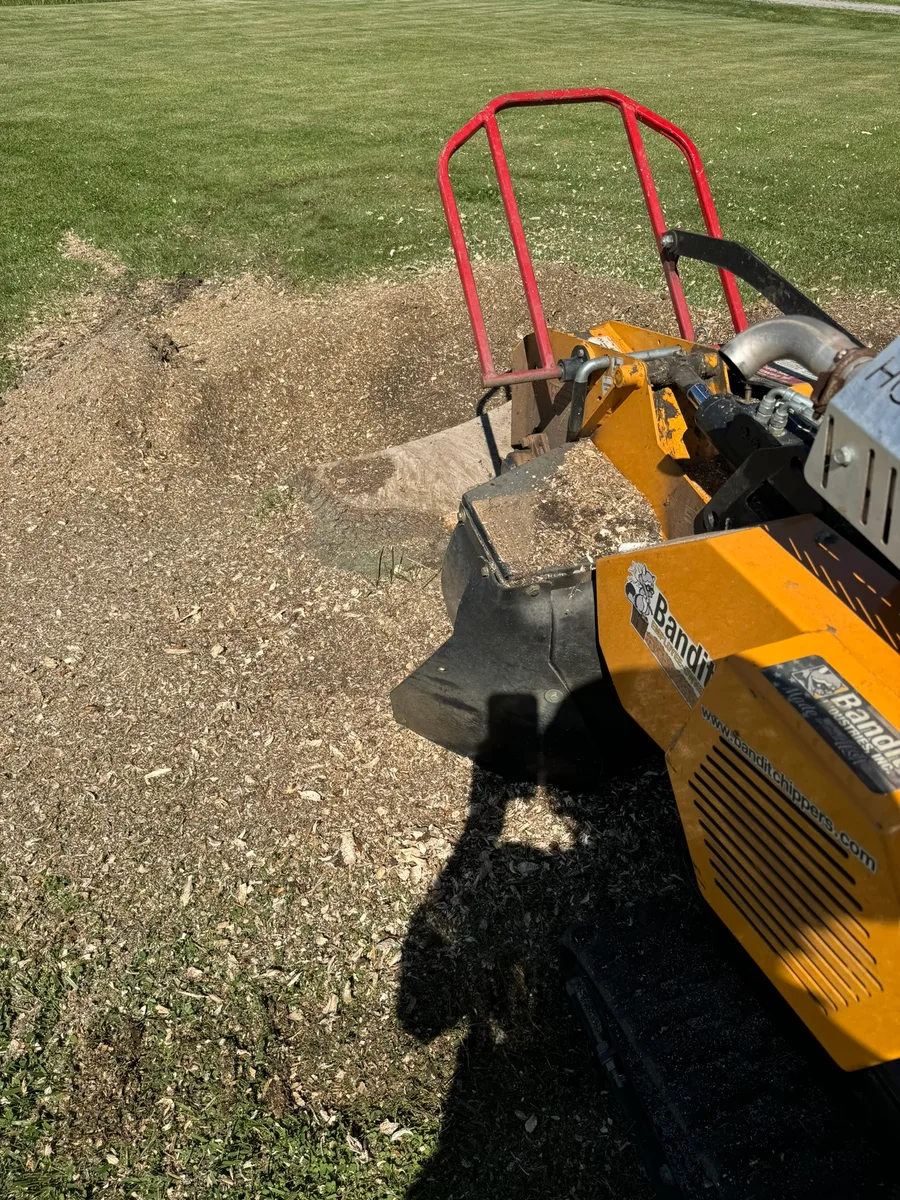
What’s the difference between stump grinding and stump removal?
Stump grinding uses a rotating cutting wheel to chip the stump into small pieces, working down below the soil surface. The root system is left in place to decompose naturally. This is the standard approach for residential properties — it’s faster, less disruptive to the surrounding landscape, and leaves the area ready for immediate use.
Stump removal (also called stump extraction) involves pulling the entire stump and root ball out of the ground with heavy equipment. This is significantly more invasive — it leaves a large crater and can damage surrounding lawn, irrigation lines, and hardscape. Extraction is typically only necessary for new construction or when the root system must be completely cleared.
We recommend grinding for nearly all residential situations.
What factors affect stump grinding?
- Stump diameter — larger stumps require more grinding time and produce more chips
- Root system — extensive surface roots add time and complexity
- Wood hardness — hardwoods like oak and maple take longer to grind than softwoods like pine
- Access — the grinder needs to reach the stump, which can be challenging in fenced backyards or narrow side yards
- Number of stumps — multi-stump jobs are more efficient per stump since the equipment is already on-site
Ready for a free stump grinding estimate?
We'll walk the property, assess the job, and give you a firm written quote — no pressure, no obligation.
How stump grinding works
Assess the stump
We measure the stump diameter, evaluate the root system, check for underground utilities, and confirm equipment access.
Grind below grade
Using a commercial stump grinder, we grind the stump well below the soil surface — deep enough for reseeding or laying sod.
Chase surface roots
Visible surface roots extending from the stump are chased and ground down so they don't interfere with mowing or future landscaping.
Backfill and clean up
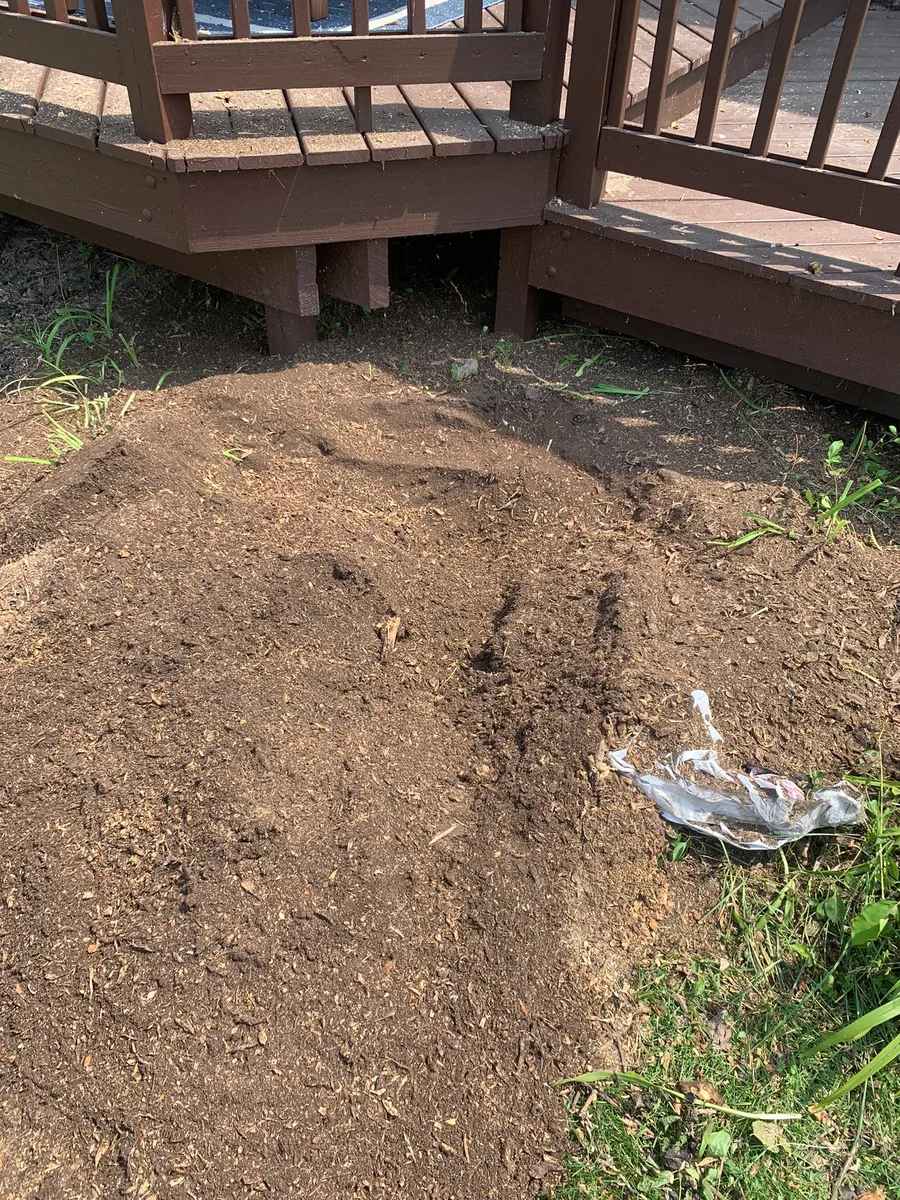
The hole is backfilled with the ground wood chips (or clean fill if preferred) and the area is raked clean. Ready for whatever comes next.
Stump Grinding FAQ
How deep do you grind?
We grind well below the soil surface. Standard depth is sufficient for reseeding a lawn. If you plan to replant a tree in the same spot, we can go deeper.
What happens to the wood chips?
The grinding process produces a pile of wood chips. We use these chips to backfill the hole. Excess chips can be spread in garden beds or hauled away — your choice.
Can I replant in the same spot?
Yes, but we recommend waiting before replanting. The decomposing wood chips temporarily change the soil chemistry. Removing the chips and replacing with clean topsoil allows you to replant sooner. Our crew can advise on timing.
Do you remove the roots too?
We chase and grind visible surface roots. The remaining root system underground will decompose naturally over several years. Roots from most species do not resprout after the stump is ground.
How long does stump grinding take?
Time varies depending on stump diameter, root system, and wood hardness. Multiple stumps on the same property can usually be completed in a single visit.